I spent the last 4-6 weeks obsessively researching Psycho and now it’s done. I’ve handed in my final draft to be printed up. It’s not finished, but it’s all I can do now.
It’s available for sale on my big cartel as well. BUY IT HERE
I feel a bit like I just finished a marathon and I have to rest for a while before being able to digest all the information and talk about it. I’m not sure why this research gripped me in this way, but it did. For future editions I’d like to find some more information about the Noack version between 1968-1980. I’d also like to talk to some radio folks from the late 60s and get the lay of the land. Also I’m quite sure there is some insider info about K-Ark Records and I might know who has it but I’ll have to see.
For the rest of August I’m hoping to do a couple shows and publish them before my family and I head out of town for a few days. I pushed everything off because of the Psycho stuff, so now I’m going to try and work on some other things.
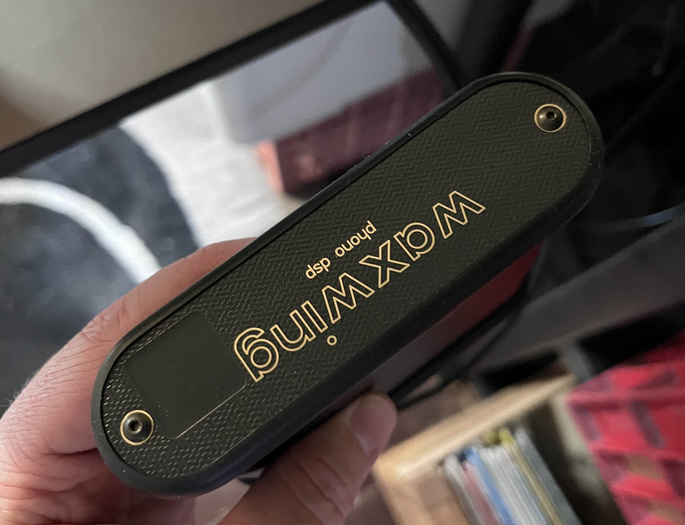
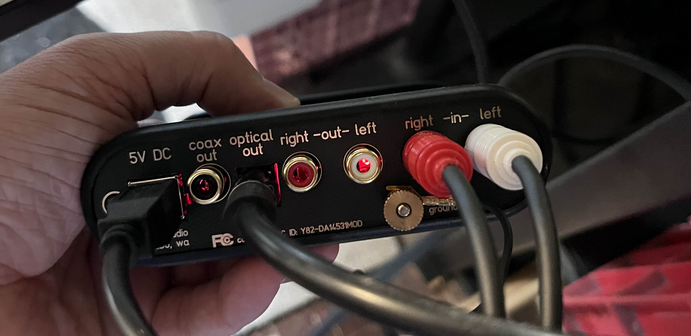
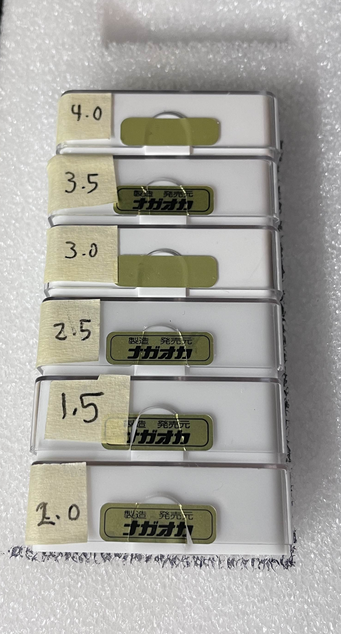
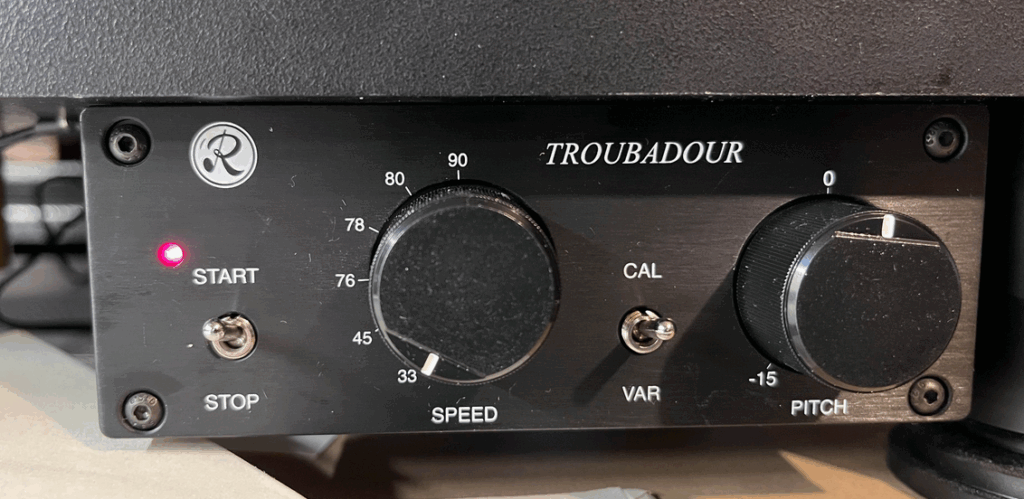
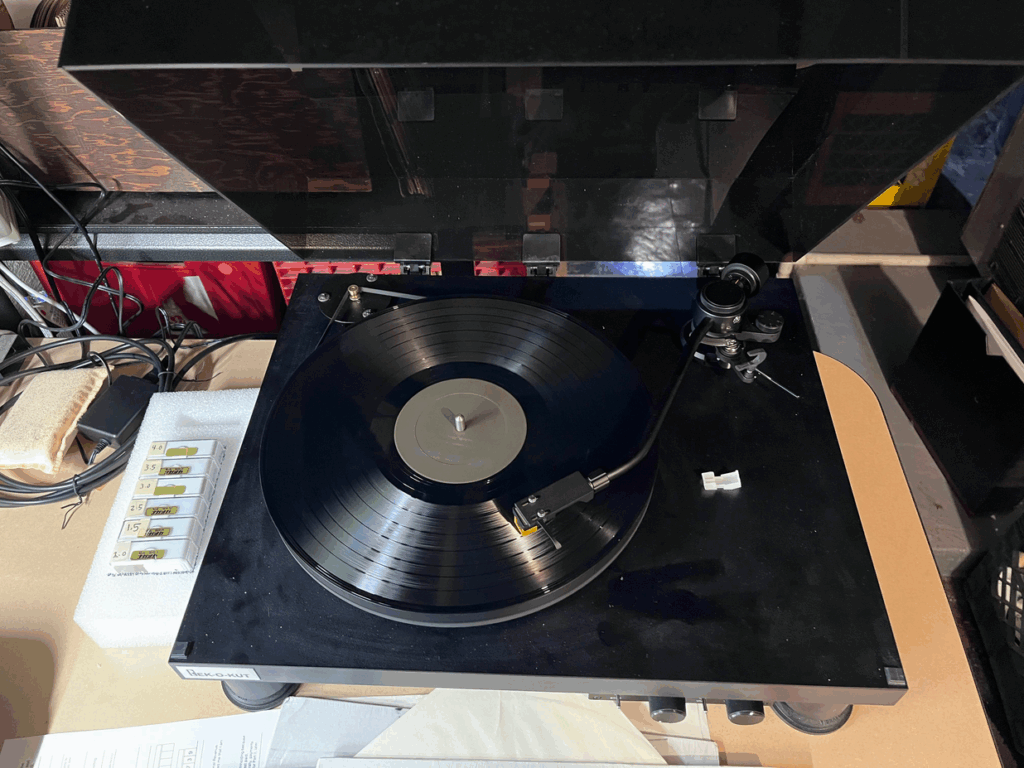
The other big news is that I received a grant for my acetate digitization project. I’ll be posting more about it later but, like I said, I’m needing a bit of rest and relaxation before I can get my brain together. Long story short, I got enough money to buy the gear I needed for this project. A new turntable with specific control adjusts, a set of archival grade styli for different old records, and a special eq box that allows me to get certain types of transfers. It’s all technical and I still feel like I barely understand it, but that’s the jist.
I’ll be transferring acetates in no time and posting them to my website. The point of this project is to get all of this music online free of charge for anyone who wants to hear it. Big thanks to the Ohio Arts Council for all of this.
Howdy folks. I meant to update this more but here I am having waited months. Funny how that works, but I genuinely do enjoy writing the blog as opposed to every other social media option. Our world just kind of pushes us away from longer form writing sometimes, or that’s the way it feels. Immediacy and shouting your one-sentence thoughts into the void are much more common. I appreciate those of you who might spend 10 minutes to read this. 10 minutes is a lot of time to read one thing on the internet now.
That’s my way of saying that this is an update that’s been too long in coming.
Newsletter News
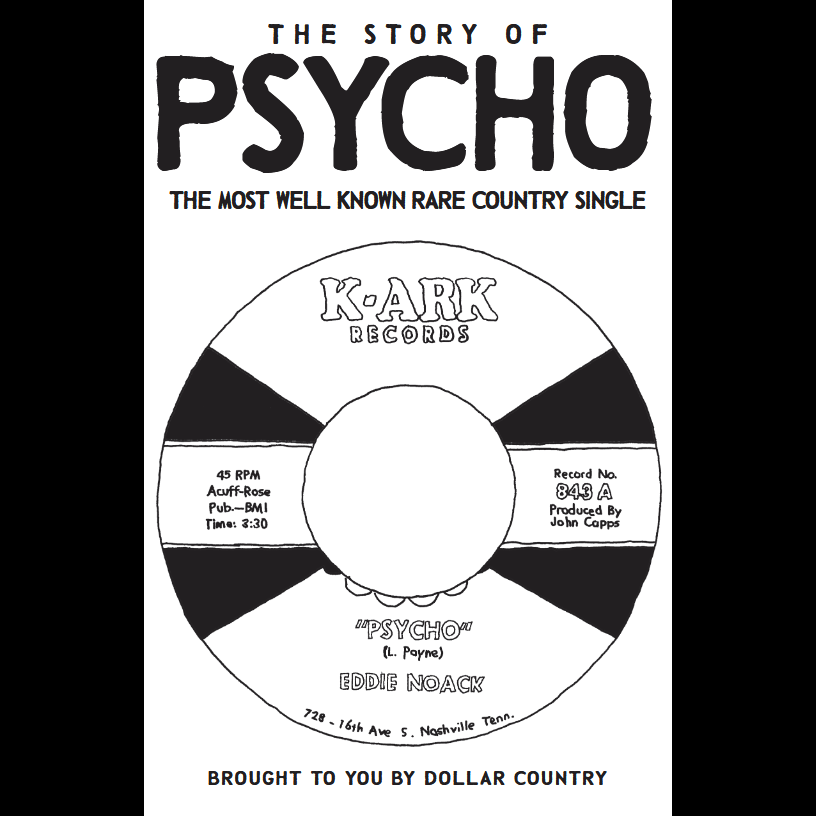
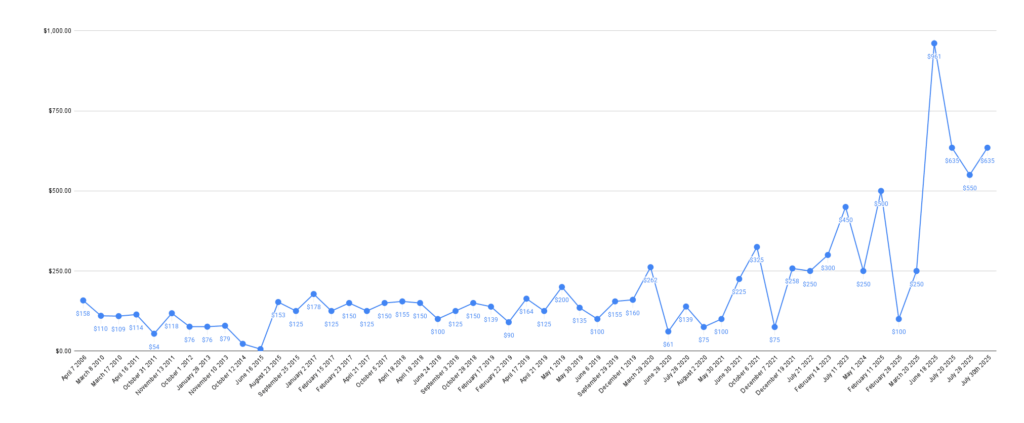
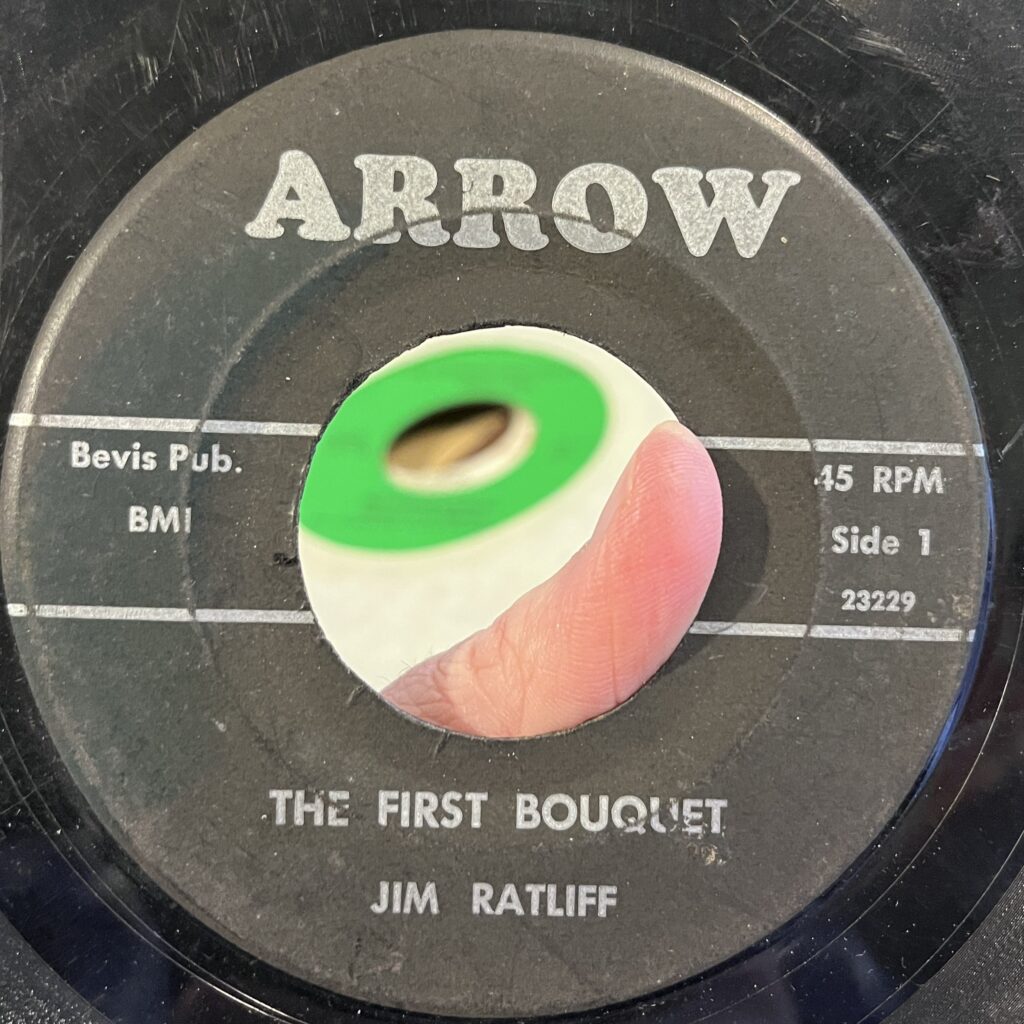
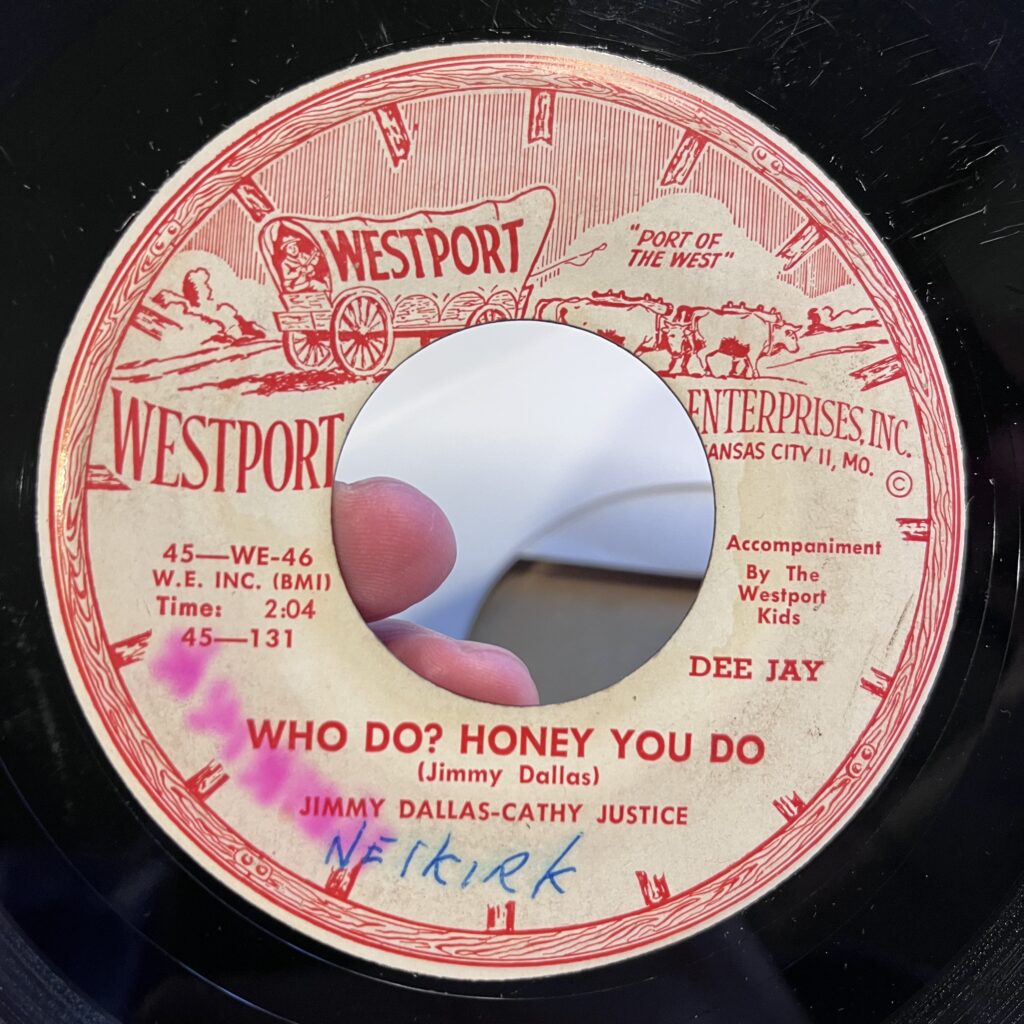
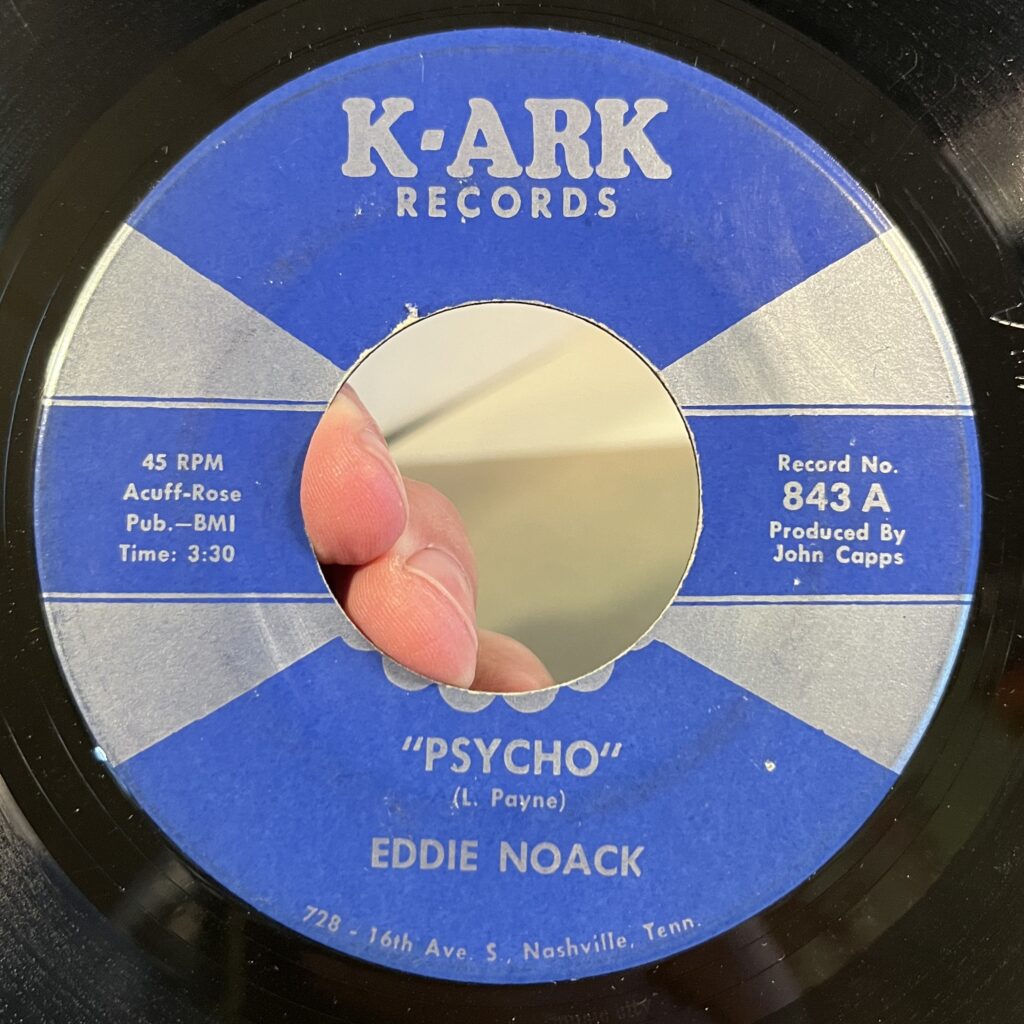
I’ve been working hard on the next newsletter. Way harder than I planned. I got the idea to write about the song Psycho, originally released by Eddie Noack, and it’s been a real rabbithole. The second I think I’ve reached the end of one thread I find another to investigate, and so it’s coming eventually. I put together a price history of known sales going back to 2006.
The reason I’ve put it together is because I think that to really write about Psycho I want to offer the context of what it means to collectors and it’s general reputation as THEE rare country record. That’s been shown in the price over the years. In 2006 it sold for $158 which is a lot for most country records now in 2025 but was a hell of a lot back then. Accounting for inflation that’s $252 today. Just this year it has sold for a record $961 (1450 AUD), which jump started a bit of a selling frenzy. Just in the last month I’ve seen three copies listed on private groups in the $500 range, two of them selling within the day.
So that context is important to show what it means to collectors, but the most interesting thing I’ve found is that there are a few mentions of Psycho early on when it first came out. The common assumption I’ve heard is that it must have flopped when it came out because it was just too weird and immediately gone into obscurity. That doesn’t seem to be the case completely, I think that happened to some degree but there are a few notes in old magazines saying it had become a favorite at certain stations and was getting requested a lot. Not enough to make it a household name, but it’s more than nothing.
The dark spot for my research is what happens between it’s release in 1968 and it’s inclusion on compilations in the mid to late 80s. The Noack version seems to have been relatively obscure until it was put on the Wavy Gravy compilation, and the Jack Kittel version was relatively well known in that time period. So far I’ve got enough information to write a pretty decent zine if not a very small book on just this record and it’s history, which is much, much more than I was expecting.
That’s where I am now. I’ve got about 10 pages of newsletter to put together in what is normally a 4-6 page printing. All in all that makes me feel great because I’ve never really put this much work into a piece before and having it come together in a way that I think reads well is very rewarding.
Newsletter Note: I was selling newsletters as “Months” but now they’re just “Issues.” So if you bought 12 months worth of newsletter you’ll get 12 issues, I’m not gonna make you pay for three months and only get one mailing in that time.
If you’d like to get the newsletter when it comes out you can subscribe to it on the big cartel.
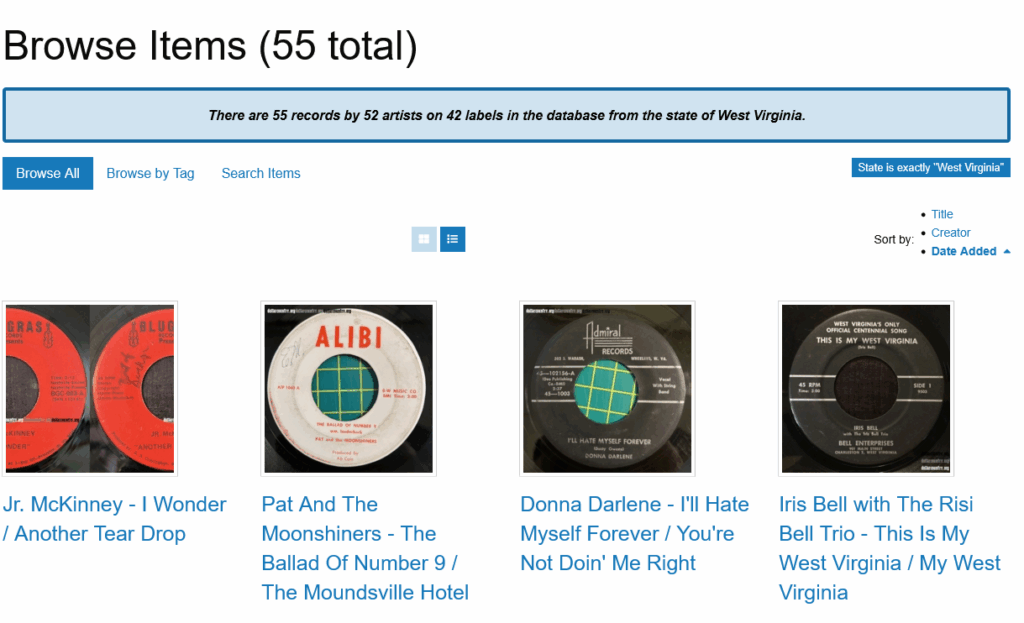
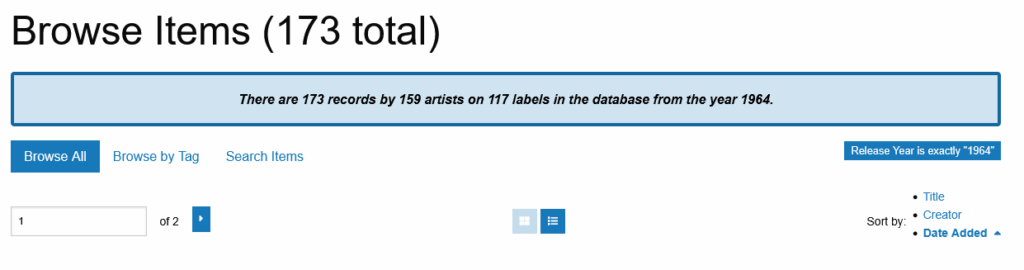
I asked for someone who could help with some database stuff and Zach responded, which means there are some updates happening. He made a thing that puts stats at the top of certain pages that I can’t wait to utilize more. It says how many records by how many artists and labels are in the DB on certain pages.
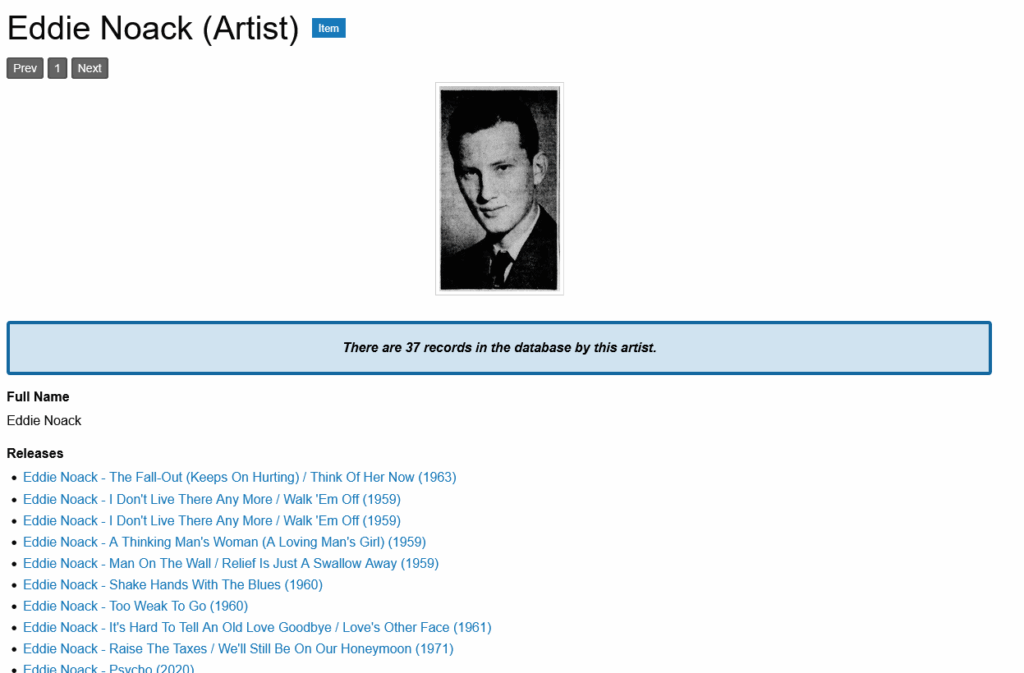
He also made something to add all the releases by an artist to that artist’s page.
The DB is still not super polished but I’m very excited to be having this stuff done and I couldn’t have done it at all with out Zach’s help.
Browse the database and see for yourself. And feel free to suggest any improvements you’d want to see!
This month I put a power play on the database. The goal was to see how many records I could submit with fresh pictures and audio, and I managed to put up 105 records, many of them with audio. Below are some of the ones I think stand out.
Bluegrass
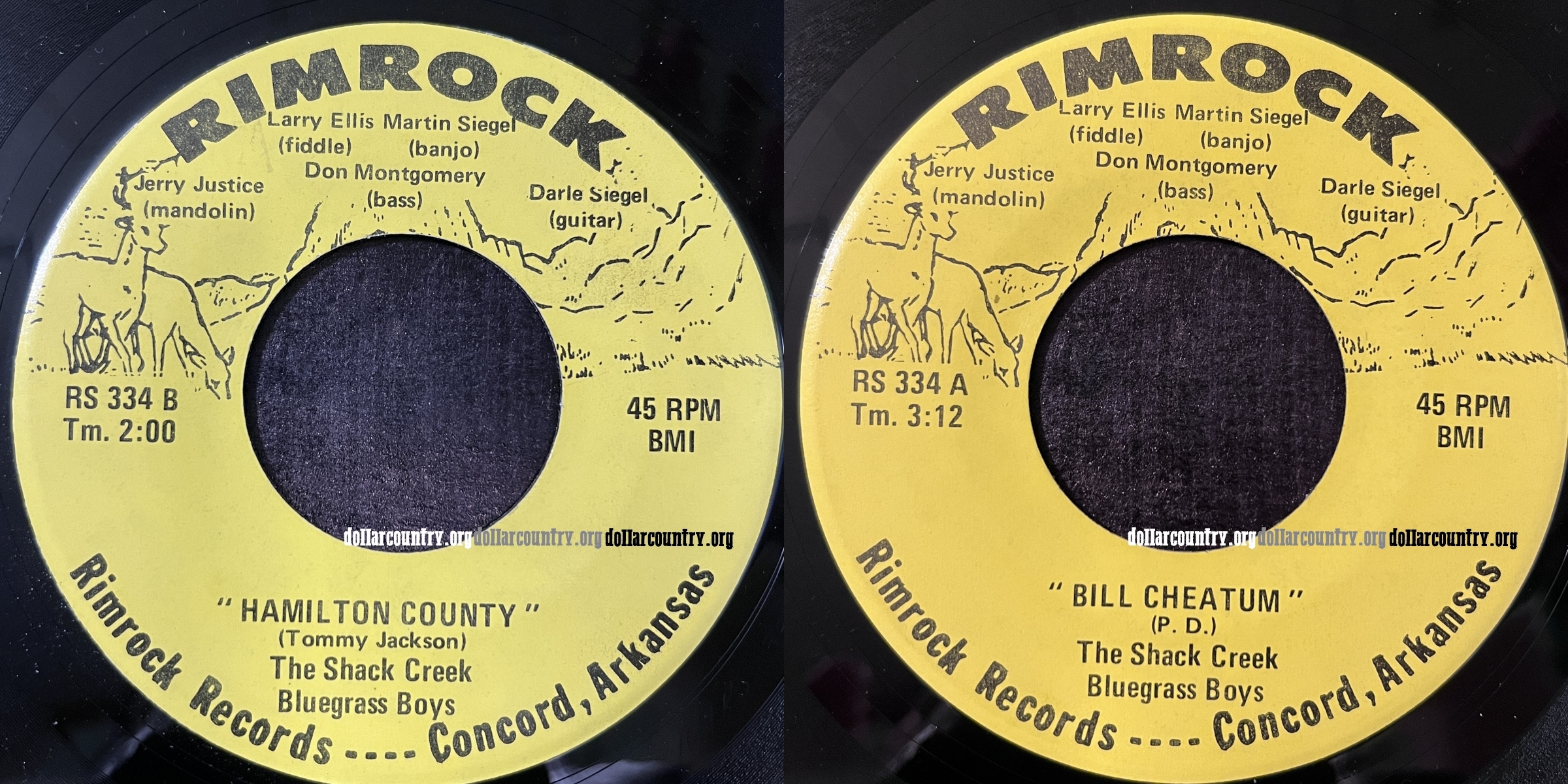
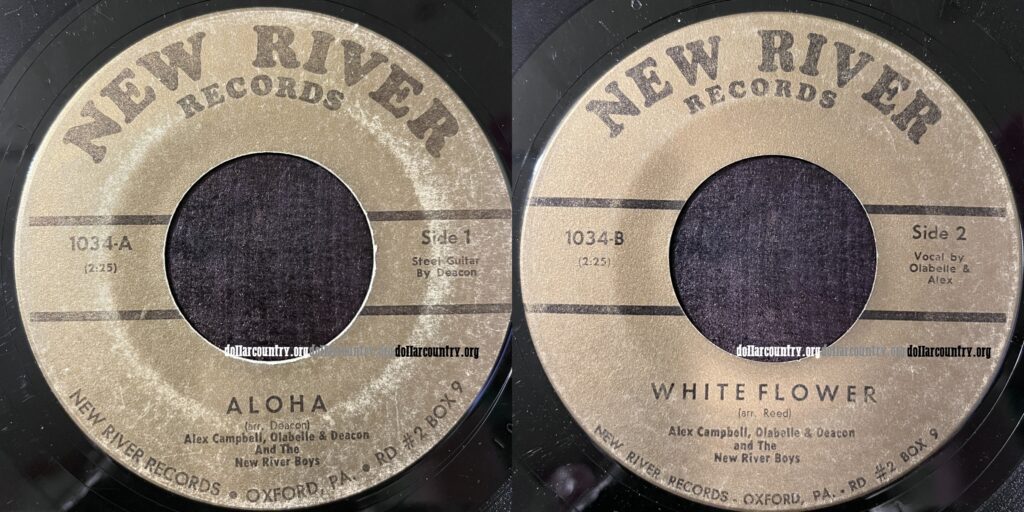
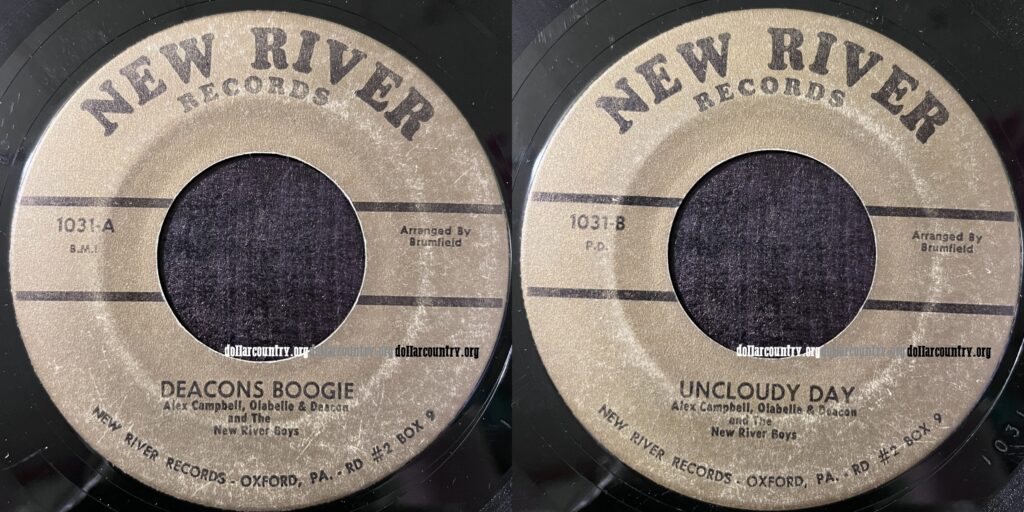
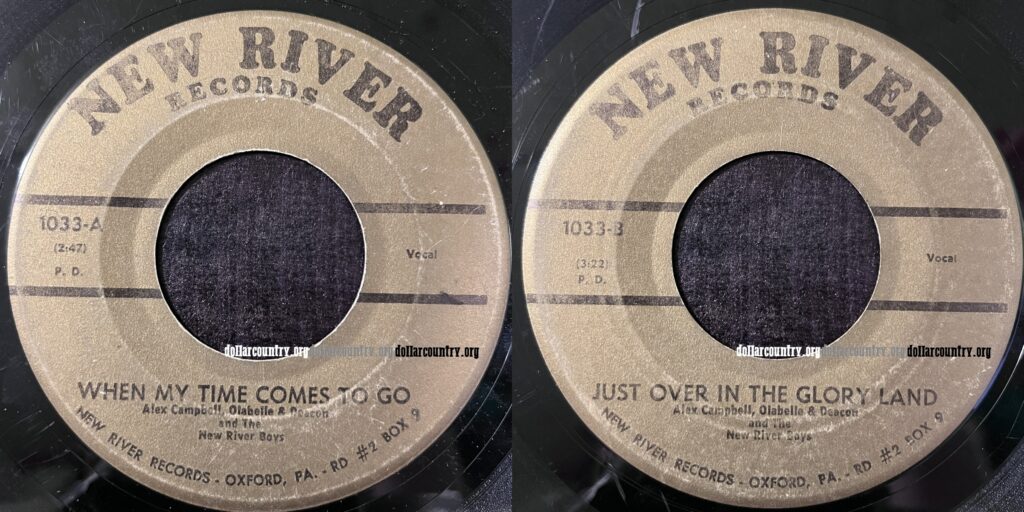
Foggy Blues is basically a blues song but the flip is a great banjo driven instrumental. Klub was based out of the Carolinas and had plenty of good bluegrass and country on it. Shack Creek Bluegrass Boys and Olabelle & Alex are both great bluegrass singles. The Rimrock, out of Arkansas, is instrumental. The New River is their own label out of Pennsylvania.
Country
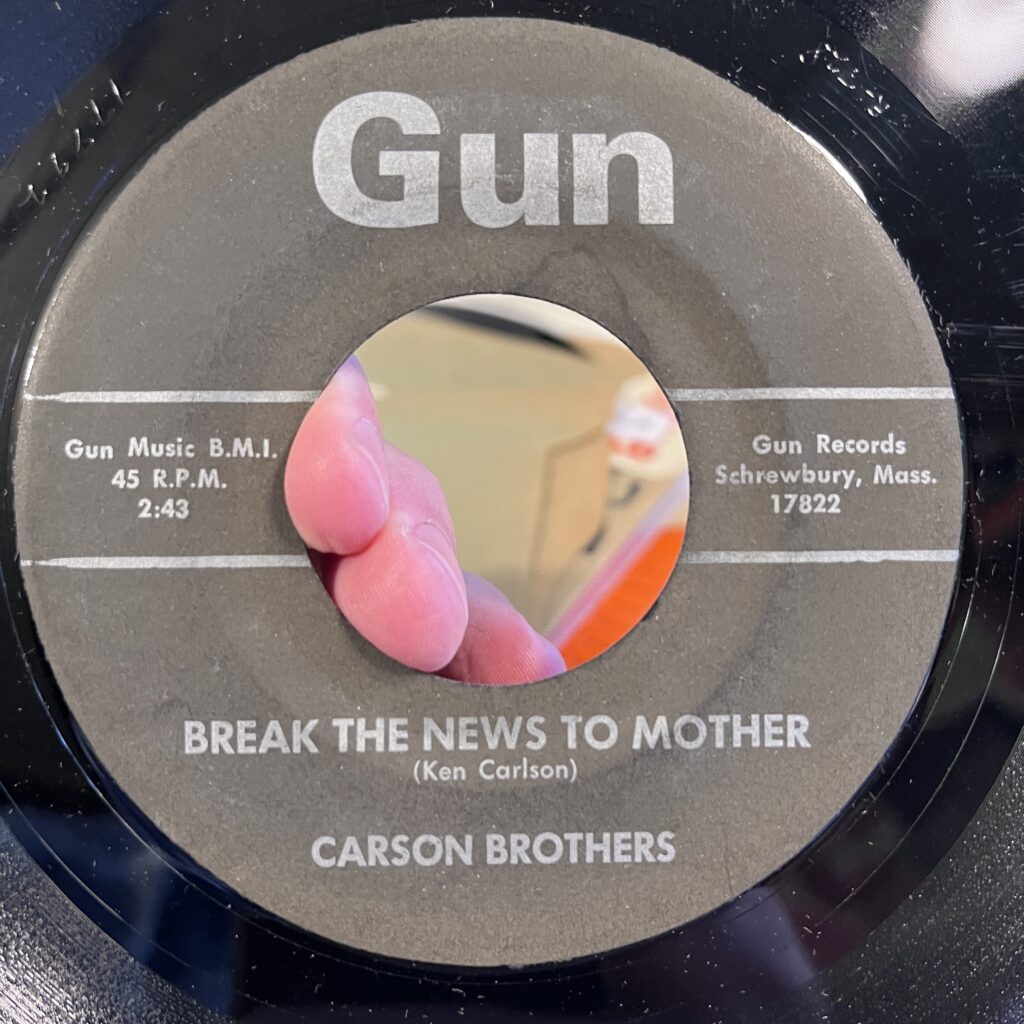
I was very happy with this Carson Brothers single, I want to find another copy! It’s crudely recorded country tunes about a truck accident. Maco Light is about a North Carolina legend of a light that’s explained in the song.
The Don West is one of the few records I have from New Hampshire, it’s just two really great honky tonk songs. The Hayseeds I bought many years ago in Kansas City and for some reason I suspect it’s an all female country band but I’m not sure if it’s a hunch or I read something. Either way the Mule Skinner Blues version on that one is one of my favorites.
Gospel
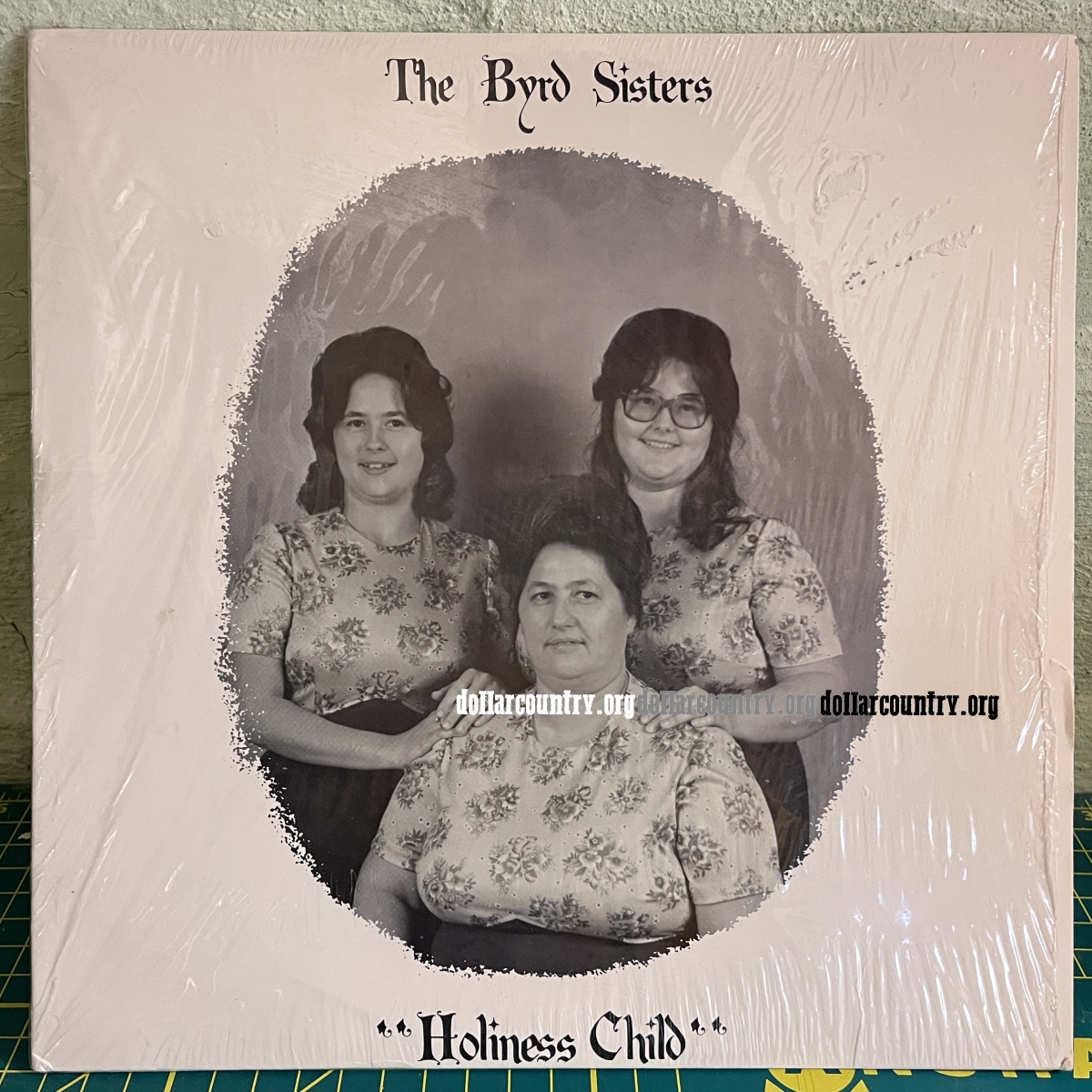
I entered a few LPs this year and this is one of them. Who doesn’t like a girl with big hair? Great accordion and solid gospel LP all the way through. The Harmony Twins were based in Ohio and this is the second of their singles I’ve found. Holmes Family Gospel Singers is on Loyal, a fairly well known gospel label from Alabama. Good stuff.
This past month I’ve been focusing on trying to input a few things every day to the database. It takes a while because my process keeps getting more complicated. At first it was just the record and pics, and then it was the record with *all* the information on it (runout etchings, pressing plants, publishers…), and now it’s the record with all the info with pictures *and* audio. It takes a while, but I think it’s worth it to be able to browse the database, find a cool record, and listen to it right there!
First up is a great double instrumental single out of Concord Arkansas on Rimrock Records. As far as I can tell the Shack Creek Bluegrass Boys didn’t release anything else. There’s another version of this 45 with a black label and picture sleeve, but the same music.
Next I have three singles from sister and brother Olabelle Reed and Alex Campbell featuring Deacon Brumfield and the New River Boys. Olabelle and Alex released a ton of material together on their own label as well as two LPs on Starday and some other things on random labels. They were based in Oxford PA where they played regularly and released a ton of music together. I labelled it as bluegrass but I’d really call it either old time music or appalachian music.
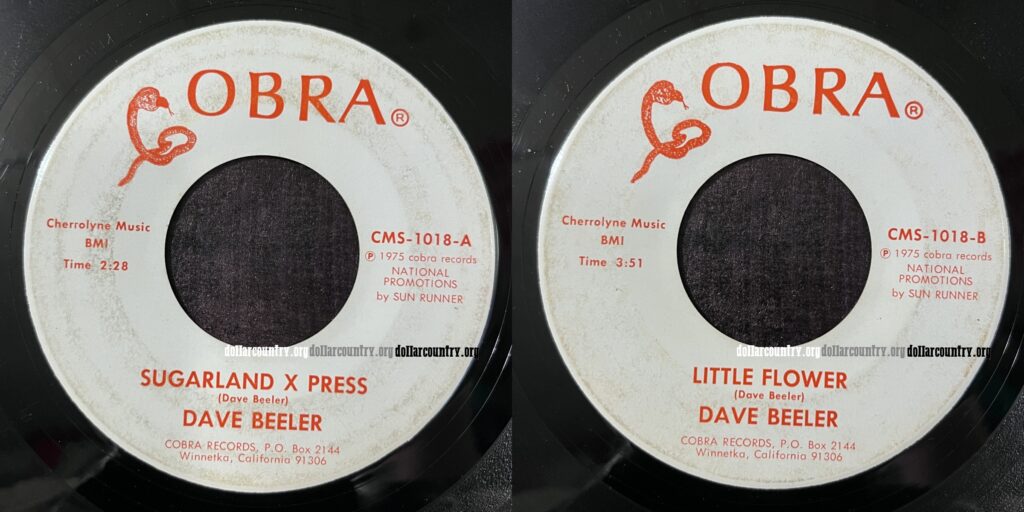
Last but not least is this odd instrumental from David Beeler. It’s not straight country, more like classical or flamenco inspired country instrumentals. I’m not sure if I could really describe it any better, I’d suggest you just give it a listen.
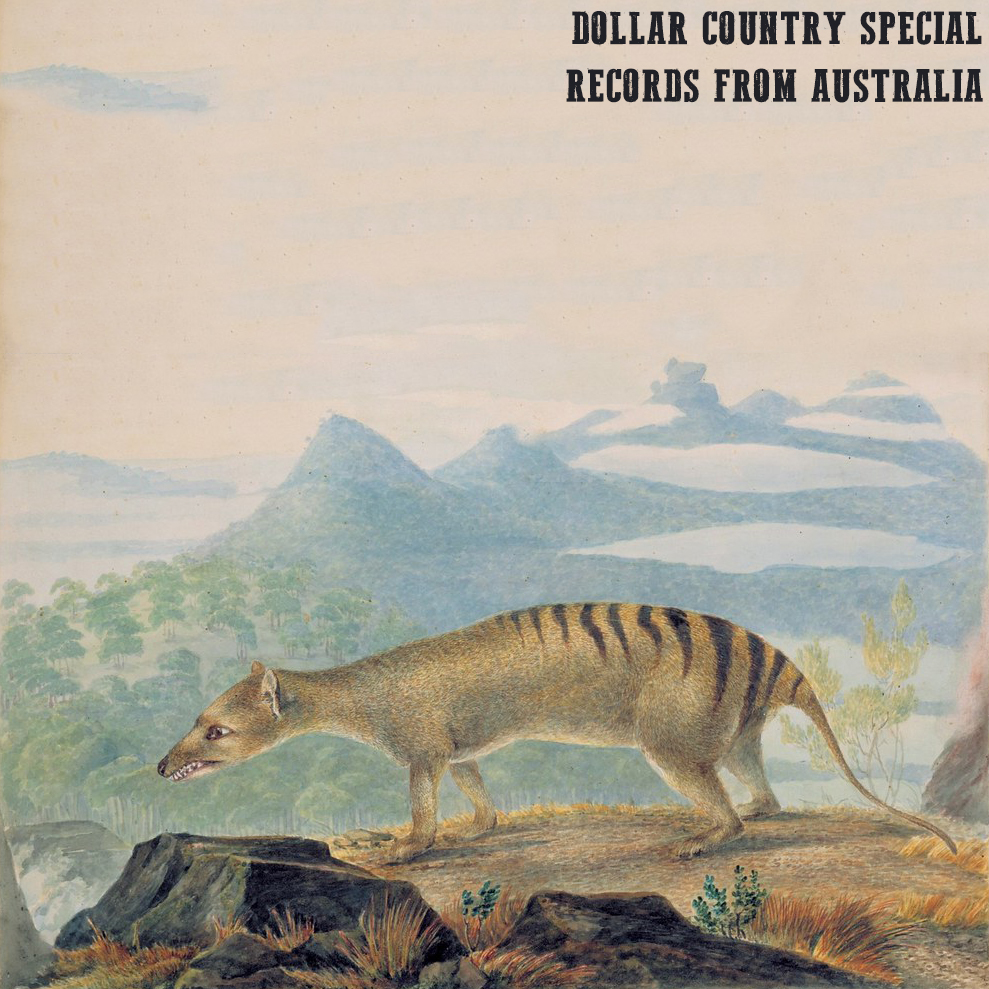
At some point I started to get some fans in Australia, I’m not sure if I ever tracked down exactly why, but I think it stemmed from a shop in Melbourne called Lulu’s. Either way some people got word down there and some of them joined the patreon and yadda yadda yadda I had some friends in Australia through Dollar Country.
A few years back one of them was in the states and visited me in Cleveland. At the time he (Willie) brought some records for me that I played on episode 200. There was also another buddy (Nic) who sent me some stuff and ever since I’ve been really interested in Australian country music. It’s a lot like American country music but it has it’s own style and flavor.
Willie sent me two packages of records last month that arrived here last week and it came at the perfect time. I was getting ready to test out two portable turntables I’ve been working on and I decided to get two birds with one stone and have a live stream to test the turntables and play some Aussie country.
The stream was one of those things that was very affirming. The nature of what I do is niche at best, so sometimes when I’ve tried live streaming in the past it hasn’t really worked, but this one went great. In my mind Dollar Country is the internet equivalent of having some friends over and getting to say “hey check out this cool record I found.” Ideally that’s how it would be, but we don’t all live in the same town, so I do what I can. On stream there were 8-12 people in the chat and they seemed genuinely interested in the music and were very excited to hear it. It made me feel great, and it seemed like everyone had a great time.
I just put up the audio on my podcast distributor, so you can view the video online if you want to see the records and turntables, or you can listen via apple podcasts (or wherever you get those) and on mixcloud.
Hope you dig it and if you have any Australian Country, or country from any country besides the USA, and want to get it to me, just drop me a line!
Tracklist: Jack Munting – The First Man On The Moon Shirley Thomas – Yodelling In The Moonlight The Trailblazers – A Pub With MORE Beer Dick Parry – Little Old Log Shack Slim Newton – The Redback On The Toilet Seat Hickey Sisters – Call Of The Bellbird Singing Kettles – An Old Log Cabin For Sale Reg Lindsay – When My Truckin’ Days Are Done Buddy Williams – The Nightmare Rick and Thel Carey – You Can Say That Again Slim Dusty – Gumtrees By The Roadway Reg Lindsay – Jungles Of Vietnam Nick Antonio – Sister Of Sioux City Sue Kenny Arnott – The Singing Wanderer Webb Brothers – The Jockey’s Are Striking Cole Wilson – The Barman They Couldn’t Sack Lucky Starr – I’ve Been Everywhere (New Zealand) Lucky Starr – I’ve Been Everywhere (Australia) Singing Kettles – Between The Devil And The Deep Blue Sea Rick and Thel Carey – White Crosses In The Jungle Dusty Rankin – On The Trail Where The Rockies Meet The Sunset Slim Dusty and Anne – Wild Rugged Land That I Love Reg Lindsay – Goodbye Swingers Reg Lindsay – From Forty To Sixty Five Wayne Roberts – Aussie Talk Buddy Williams – The Snowy Mountains Slim Dusty – A Pub With No Beer
I’m returning to doing live events in May. On the 1st will be Country Night @ Little Rose, which I had taken a break from since the first of the year. Then in June I’m gong to be playing records with Justis from Wathéča Records.
May 1st – Country Night @ Little Rose
7-11 pm, Free!
14206 Lorain, Cleveland Ohio
June 19th – Country Night @ Little Rose
7-11 pm, Free! Bring money for mixtapes and tips
with Justis from Wathéča Records playing from his collection of Native American records.
When Dollar Country started I only collected 45s, it seemed easier and cleaner. Two songs per disc is nice. No picture sleeves, a nice big hole in the middle that helps you hold onto a stack while you flip through. Life was easy back then.
People used to mention how I didn’t collect LPs, I had to turn down so many, but at that point they just didn’t interest me. There’s probably a reason I told people but really I just wasn’t interested in them for whatever reason. At some point that changed because I realized there were a lot of great things on big records and the genres represented were different. In country you’ll always have more than enough 45s. Gospel and Bluegrass are much more LP centered. If you’re gonna spread the word of god you may as well do 30 minutes instead of 6.
So, anyway, things are different now. I’m still picky about country LPs because it’s not really worth collecting stuff unless it’s rare, you can find non-rare stuff in other people’s collections. But with Country Gospel you just have so many options on LP that never made it to a single.
Another thing 45s have going for them is that they’re easy to input to a database, LPs on the other hand have significantly more information. Not just more songs, but more songwriting credits, more publishing credits, more, more more. Personally I also have a check in system for my 45s. Clean them, sleeve them, stamp them with a date, ID number, and source number from where I got it, and now it’s in the collection. LPs take longer to listen to, take longer to log, and take up more space. Now multiply that by a few thousand.
Now that you’ve heard plenty about my feelings towards the different sizes, maybe you can understand why I haven’t put any LPs on the database yet. But I wanted to put them on there, I was just waiting to get my head right. To have the best entry point into it. I made sure the database was ready (there’s a lot of inside baseball for database and info stuff happening here), and I had all the right fields set. Yesterday I put the first full listing up with audio and everything.
This record isn’t special outside of it being the first one. I mean it’s special in the way that any bit of music is special, but I didn’t choose it just for this. I’ve also made the streaming audio into a basic video with the album covers so it’s more like youtube. People seem to like that style of video and something about just having streaming audio felt lacking to me, and maybe to others it did too.
The end goal is to have the website feel institutional in that it’s focused on the information but also not have it feel clunky in the way that many institutional websites feel. Useful in the way that the internet used to feel 10+ years ago and without the constant ads, unneeded widgets, and website features that seem to take away from the actual usefulness of the website. Has anyone else noticed this? It drives me crazy when I want the hours of a business and I have to go to a website that’s mostly scrolling pictures and I can’t just find out when they’re open.
Here it is, I hope you like it. The Byrd Sisters are as good a group as any to start it off. Three Sisters In Jesus, although in real life they’re two daughters and a mother.
I’m feeling much better now. In the last newsletter I was reflecting on a hard year, one of the hardest I can ever remember. After that reflection I realized how important it was for me to find a balance between my family life and Dollar Country because both are important to me. The first rule was to not keep setting deadlines for myself and so far that’s been an excellent change. My worry, as always, is that if I slow my output then my support will slow down too, but that hasn’t been the case. You all seem to like what I do enough to keep supporting it.
The biggest project that took place recently was adding location data to many of the records in the database. You can read about that in the Geographies of Dollar Country write up. It felt good to have a data entry project that I was excited about. I also picked up a project I’d dropped almost two years ago, pressing volumes 3 and 4 of my patreon lathe cut project. I press up a limited amount of tracks that are rare in my collection for the patrons to buy. I don’t really make money doing it, it’s just a fun way to share the music in the archive.
The kid is walking and babbling. I feel lucky to get to watch him grow. Being a parent is like joining a huge team of people who all experience this amazing thing, despite it being so common it also feels unique and amazing.
So the beginning of 2025 feels good. I got the screener of the Dollar Country documentary that director Michael Suter is working on last night and really enjoyed it. I can’t wait to show it to you some day, but it’s not in the final cut stage yet so I will respect Michael’s wishes and not share it despite how much I want to. I’ll also be going out on my first dig trip since before I was a parent, it feels like a big step to be away from the family for a whole day, but I had to break the seal sometime.
Cheers Franklin
Music And Fandom
Or How For Some People Music Is Just A Phase
Music is special, it’s special for many reasons and one of them is how it differs from other forms of arts and entertainment. You can’t really have a movie be your companion, you can watch a movie, and you can love a movie, but you can’t watch a movie while you drive to the grocery store or walk to work. And it’s the same with most visual arts, using your eyes takes your attention away from the rest of the world. But music can accompany you through life while still being able to take in what you’re doing and where you are going. It’s unique that way.
There’s another, more current, way it’s uniqueness is important to us. It’s ability to be copied and shared make it special. Nearly anyone can copy music to anywhere and share it and have the copied version be nearly identical to the version the artist intended you to hear. You can copy and share movies but unless you are quite wealthy you won’t have a home theater to experience it the way the makers intended, and you can make an ultra high resolution scan of a painting but you won’t be able to see how far the brush strokes raise off the canvas or the delicate carvings on the frame. This quality of music is something we deal with every day. It allows the makers of music to be taken for granted, and for giant corporations to make millions while musicians make next to nothing. The parts of music that make it unique and amazing can also be it’s greatest flaw.
This article won’t be about that, but I had to get it off my chest because I think that is what makes it possible for music to be more important to humans than ever before and one of the least monetarily valued artforms.
And it seems that music IS more important to us than ever before. We can listen to nearly any album we want at any time without having to purchase it. But I think that music fandom, for many people, can be a phase and not lifelong.
My theory is this: some people have a time in their life when they’re interested in discovering music. In this time they find the sounds and bands they will enjoy for the rest of their lives. Once it’s over they continue to like those bands and sounds but rarely, if ever, seek out new things that sound different than what they discovered in that period. It starts around puberty and ends around the age most people would graduate from college. There’s actually some studies that back this up, kind of. Studies published by the New York Times, Rutgers, Oxford, and Harvard suggest that people have an opening in their lives where they are most interested in musical discovery, meeting more diverse sets of people, and tend to be the most open-minded and accepting. Those ages? 13-24.
Now, there’s more to it than just music. Around age 24 is also when many people start the lives they’ll lead for the rest of their days. Maybe they start a career in what they’ve studied for or maybe they start a family, but the result is that they have less time to listen to new music and go to shows. When you start doing life things that people expect of you you often have to pick and choose which hobbies you’ll have time for, if you have time for any at all.
When I worked at a record store I saw this happen in front of me. Students would come in excited about a local band or asking what records to check out, and then a few years later they would come in and ask about those same local bands and if there’s any records that sound like those records from a few years ago. Or they would come in when one of their favorite bands released a new album. Many of them stopped asking about new things to check out. Their tastes had been made and they wanted more of it, but not to be challenged. At the time I was critical, thinking that they had given up, but that’s not the case, it wasn’t good nor bad, just different.
Sometimes I wonder if I fit into these studies too. Did I develop a sound I liked in my formative years that I still search for? For all intents and purposes I’m a professional music listener, but am I still beholden to that time in my life? Despite listening to hundreds of hours of new-to-me music every year do I still only appreciate the stuff that fits that sound I learned to love then? No, I don’t think so. I think that, for some, being a music fan is a life long venture, and that’s why I can call myself a professional music listener.
With passion and time we can still learn to love new sounds and artists. I firmly believe that any form of art can be appreciated by anyone if they try. Some of the songs I’ve learned to love the most are ones I was luke warm on at first but had a fan email me and say how much they loved it. Their excitement made me revisit it and see it in a new way, opening up that appreciation in me.
This is a microcosm of life isn’t it? Sometimes it feels like the world wants us to choose what we think and never change it, no matter what. How many times have we seen a headline criticizing someone for changing their view on something? We view changing your opinion to be a betrayal instead of growth, some sort of hypocrisy instead of education and reevaluation. Sticking to our guns means that we know what we think and nobody is gonna tell us different. But I think growth and reevaluation is strength. Being able to see things from new perspectives, whether it’s music or not, has opened up new worlds of appreciation and compassion for me. Rigid things break, flexible things adapt.
So here we are, at the end of an article on something I’ve thought about daily for the past 15 years. What’s the point? What am I getting at? It’s that music holds different roles in all of our lives, but we also get to decide what role we spend in the life of music. We can choose to just let it affect us, or we can add to it. We can become active in our love for it, whether for a phase or a lifetime, always seeking out new sounds and genres. We can be active participants and then let it slide when life becomes challenging and come back to it too. The strength, and weakness, of music is it’s accessibility.
Happy listening.
Geographies Of DOLLAR COUNTRY
Starting in 2020 I began keeping lists on discogs of which state each of my records was from*. It was kickstarted by a goal I had to post a new record from a different state each day on instagram for 50 days in a row, so I went through each record in the collection over the course of a couple months and if it had some sort of location on the label I put it on the corresponding list. I didn’t realize at the time, but I was beginning to create a geography of Dollar Country.
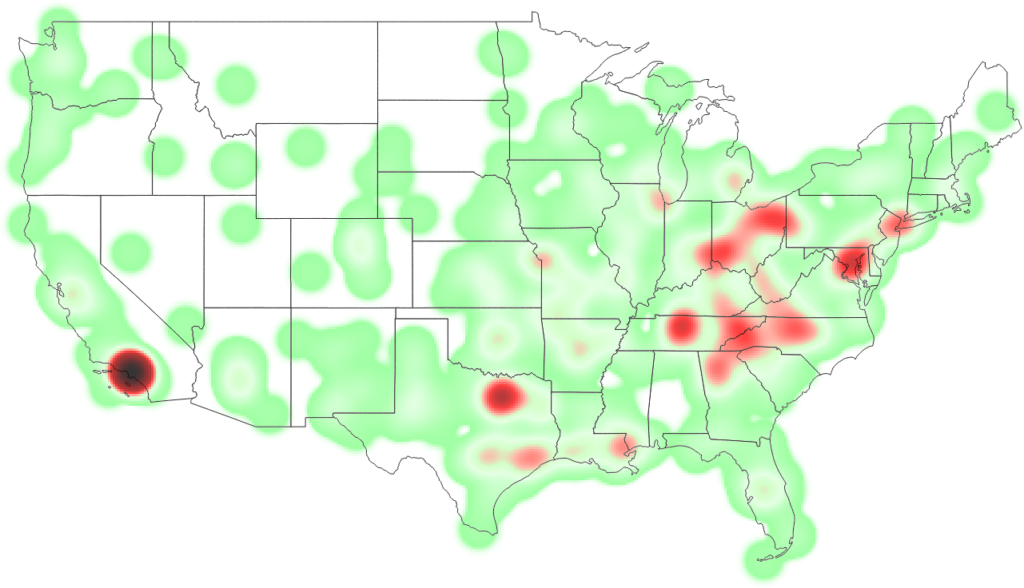
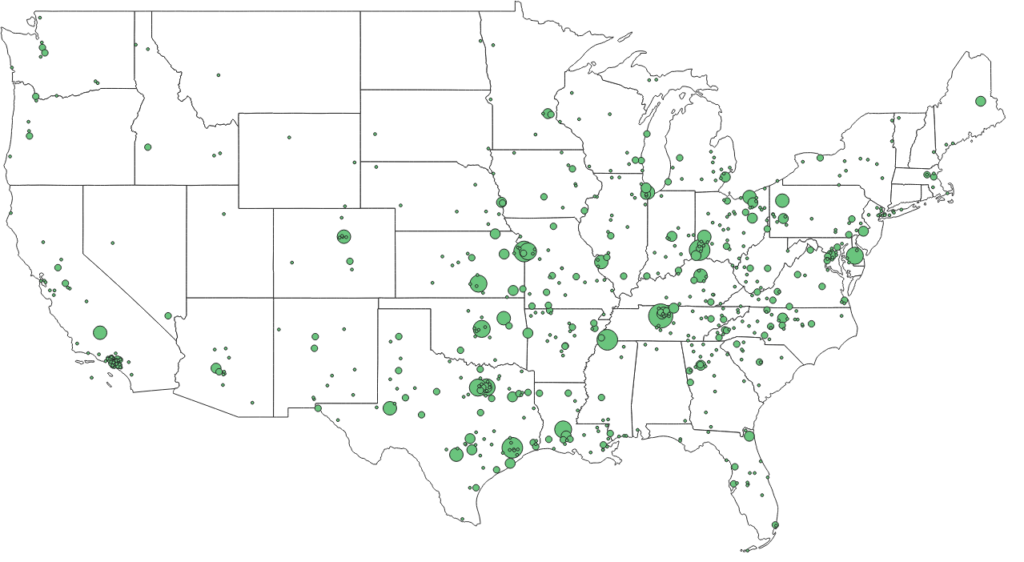
Each point on the above map is the location of a record from the Dollar Country Archive. The smallest dots are locations with one record and the bigger dots are locations with multiple records. The biggest dot is on Nashville, with other hot spots around Kansas City, Cincinnati, Los Angeles, Dallas, and Houston. These cities represented hubs of recording and label activity. The areas with less hits on the map don’t necessarily represent a lack of country records. In the rural west there were fewer labels and recording studios compared to the east. Also the DC Archives represents where I have been able to find records from, and I haven’t been everywhere to dig yet.
Fast forward to 2025 and I finally got around to moving that data from my discogs lists to my database, tying it with each record. This may not seem important, but being able to do this allows me to visualize the data, and that is very exciting. I think this will allow for new ways for people to experience the collection and realize why it’s important. Being able to look at the records from your hometown is fun.
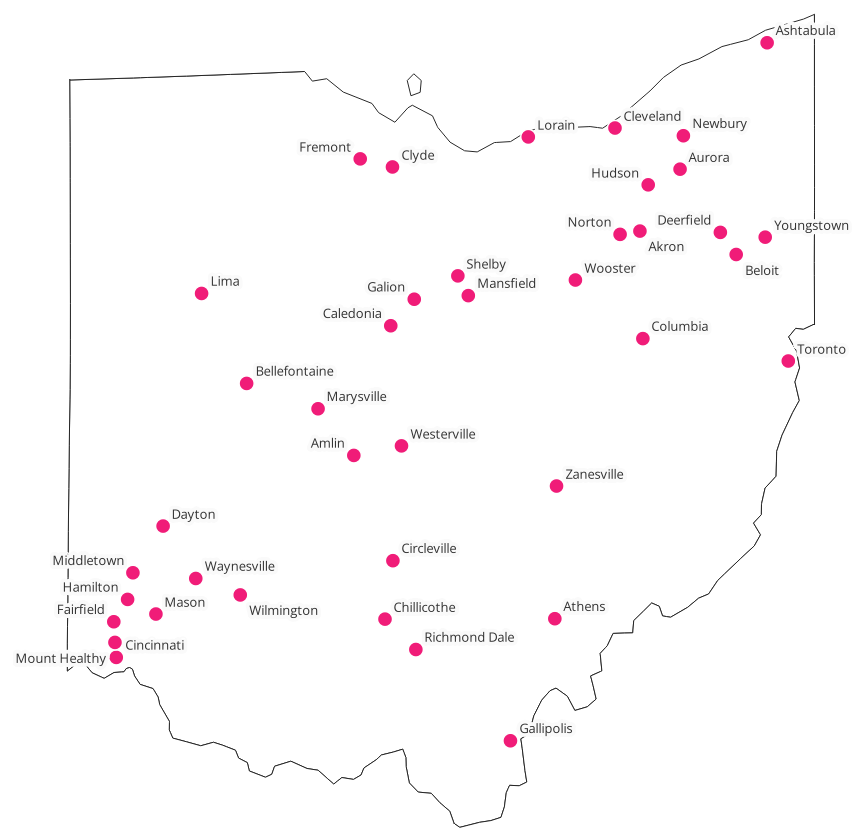
A map of just Ohio. This only shows locations DC has records from and does not account for quantity from each place. You can see the grouping in southwest Ohio around Cincinnati. Cincinnati represents a gateway from the south to the north where many rural folks either ended up settling in or came through on their way to work industrial towns in the north. Cincinnati also had multiple pressing plants and labels which account for the wealth of records from there. Northeast Ohio, where Cleveland is, also has a lot of records but many of them were located in the city limits of Cleveland so it doesn’t look as dense.
These points also tell a story, and with more data they will tell more and deeper stories. There’s so much more to do and I’m going to try and spend as much time entering data as I can in 2025.
This was all kicked off by my plan to do another 50 states project. I still don’t have any records from Rhode Island and I need more from Utah, Montana, North & South Dakota, New Hampshire and Vermont. If you have any records from there you’d like to donate to the Dollar Country Archive then please get a hold of me.
This project wouldn’t be happening if it wasn’t for my good friend Colin Pate who showed me how cool geography is.
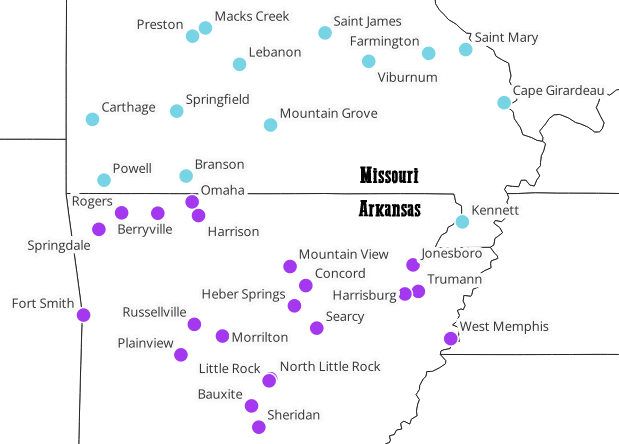
One of the focuses of the DC Archives is the Ozarks which is a region that covers most of southern Missouri and northern Arkansas. Unlike the Appalachians, the Ozarks are less well known for their contribution to rural and country music but I find it to be rich with music. If you’d like to hear some of these songs you can check out the mix I made on both cassette and CD called Country From The Ozarks.
* What do I mean when I say these are where records are from? Basically I find any location information I can. For most of these the location is where the label was located, for some of them it’s where the artist was based, and for others it may be a combination of those or something else. This data is only for 7” singles and doesn’t include LPs.
►Book Corner
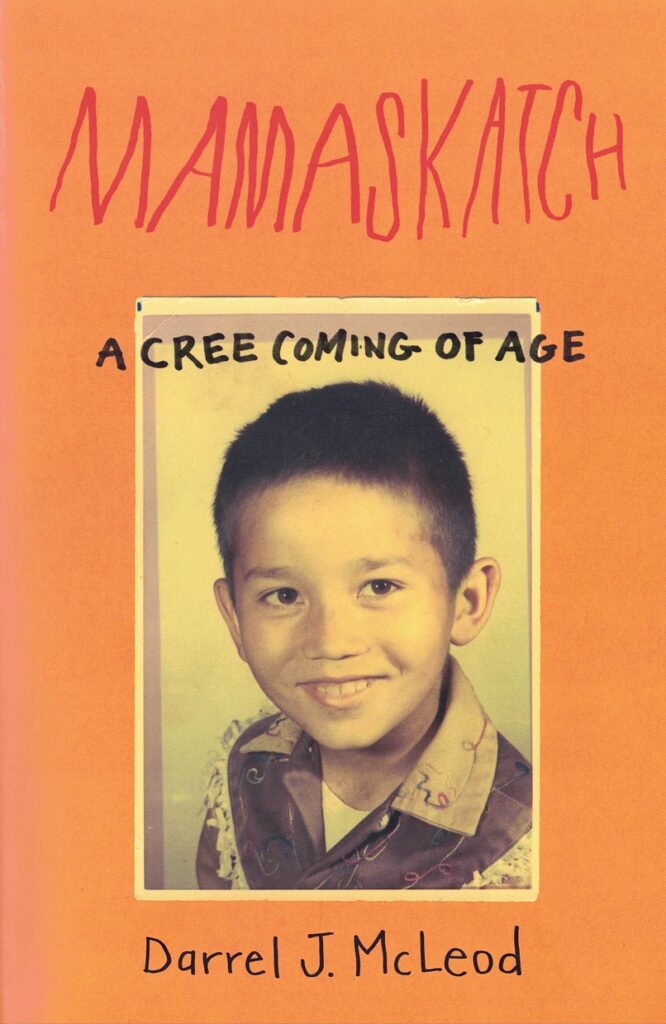
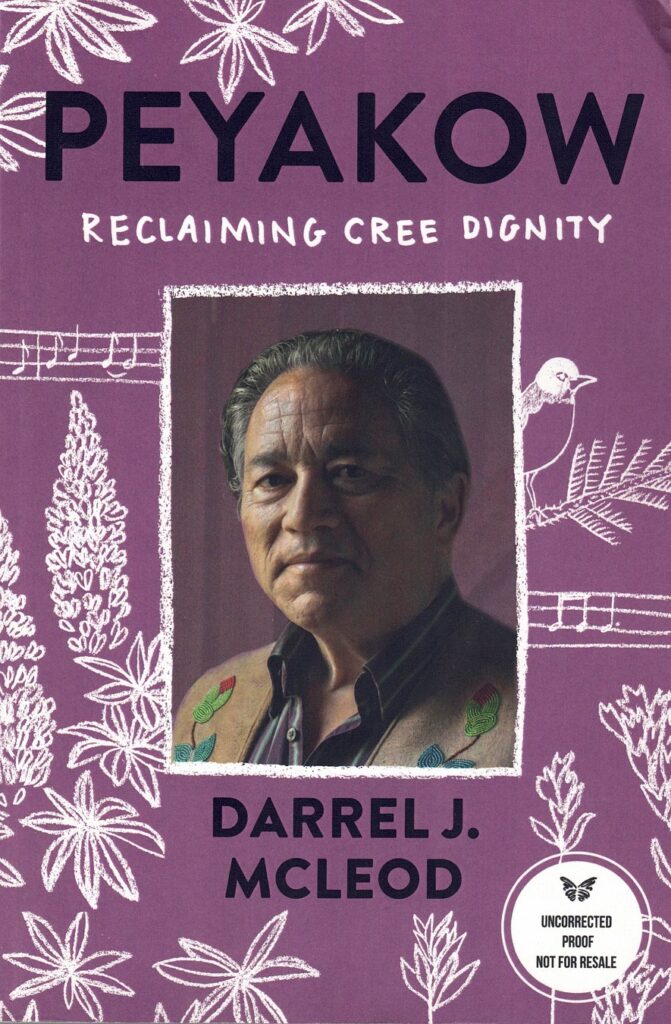
Mamaskatch: A Cree Coming Of Age & Peyakow: Reclaiming Cree Dignity
by Darrel J. McLeod Year: 2018 / 2021 Pages: 228 / 244 Publisher: Milkweed Editions
I’m no expert, but I’ve read more than the average North American about how colonizing Europeans treated the Indigenous people here. I know there was a planned effort to kill them with disease and to erase their culture with laws against speaking native languages, schools to re-educate their children, and governments keeping them in abject poverty. So I thought I had an idea of what I would face in Mamaskatch. I wasn’t wrong, but it was so much more.
The two books cover roughly the first half and second Darrel J. McLeod’s life. Mamaskatch is the story of his childhood and young adulthood living with his Cree family in rural central Alberta near a town named Smith. His mother, who attended government residential schools where she was punished for speaking Cree, was loving and protective of him and his siblings. Their father, Sonny, had passed away at an early age from cancer. This story isn’t sugar coated, so I won’t sugar coat it: the trauma hits early and often. Everyone in Darrel’s family has been affected by extreme poverty and the affects of government sponsored abuse. His mother becomes reliant on alcohol and their house becomes a nightmare. His sister, Debbie, gets married at 14 to escape. Darrel also leaves as soon as he can. He is shuffled between relatives until he’s old enough to have his own place, for a time living with Debbie and her husband Rory, where Rory beings sexually abusing him as an early teen.
Almost everyone in his family experiences sexual, emotional, and physical abuse from partners and family members. Through it all Darrel finds a way to make ends meet and keep a fairly stable household in Edmonton and then Vancouver. Often his apartment is where his relatives seek refuge when they’re on the outs with one thing or another. It’s apparent how much he cares about them and he works non-stop to make enough to take care of them as best he can. Mamaskatch ends with the funeral of his mother.
Both books are told in snippets. Flashes of a story here and there. Peyakow starts off with Darrel accepting a job as a rural school principal in an Indigenous community in northern Alberta. His experiences there foreshadow the rest of the book. He spends his adult life working for the government in various capacities, as a principal, treaty negotiator, and bureaucrat working with Indigenous tribes. He finds the work fulfilling but is also constantly thwarted by racism against native people, but he feels strongly that to help them there must be native representation in the government. Mamaskatch was difficult to read and Peyakow offers a lot of hope. Not everyone who has been through what McLeod has made it out alive, including members of his own family. He struggles along the way but in the end his affect on the world is measurable. Darrel helped negotiate treaties with First Nations people that gave them back rights to their land and fisheries, and was part of the negotiating group that got Canada to admit to and apologize for the residential school system.
I came away from these books with mixed emotions. When I originally posted that I’d bought them Darrel messaged me on instagram saying that he hoped I liked them. I finally picked up Mamaskatch after two years and while I was reading it I was formulating a message I would send to him when I finished. I’d never had that personal of a connection with an author I’d never met before and I was excited. As I read all the awful situations he went through I started to wonder just what I would say, everything I could think of didn’t seem to capture how I felt. One night before bed I looked him up and realized he had passed away in 2024. I felt a sense of loss about this person I’d never met. Most biographies tell you about the things a person does, but these really felt like a window into his life and emotions, I felt like I knew him. The message I was formulating in my mind would never be sent because there was no one to send them to. Thankfully he left his story for all of us. I won’t ever forget it.
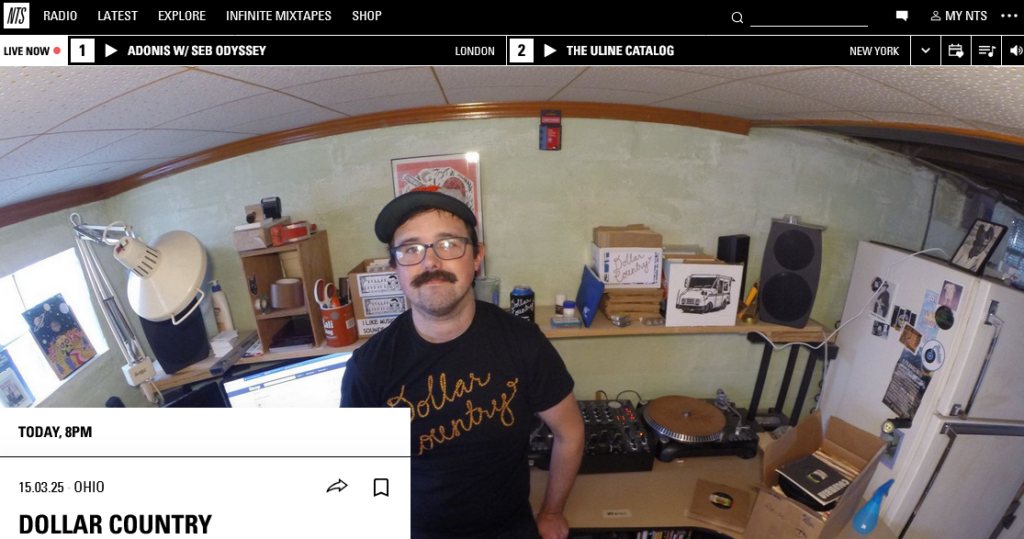
DC is going to be live on NTS.live Today at 8pm EST Listen Here
I was asked to do a second residency on NTS.live radio, which I’ve posted about before, but as always I try to make things special in some way.
Starting with today’s episode I will be doing a trilogy of the 50 states project. I’ll be playing one country single from each state (except ND and RI*). This is related to the ongoing geography of Dollar Country I’ve been working on.
You can tune in today to the first episode or go to the NTS website to listen to my old shows on there. Here’s the link.
*if you have any country records from ND or RI please let me know so I can find some! Also looking for stuff from ID, NV, UT, VT, NH, MA, CT, and WY. I have some from them but want more.
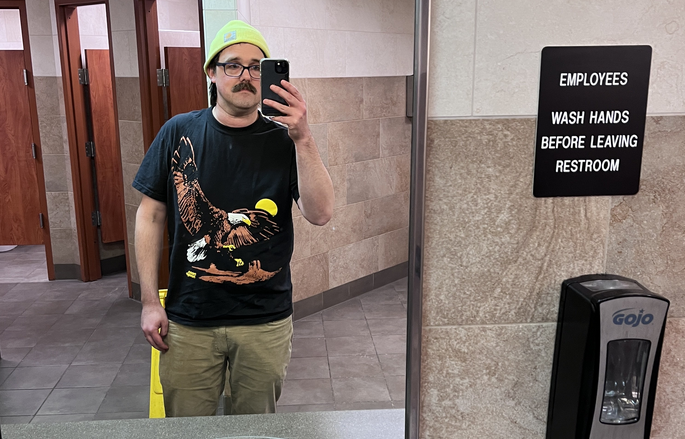
The look of a man who had 6 hours of sleep and then drove 8 hours
Well I finally did it, I left the house. When my wife and I found out we were having a baby I made plans to not make plans for all of 2024. Normally I go out digging for a week once every couple months, but with a newborn I knew I wouldn’t be able to do that, so I didn’t. And then I felt like I couldn’t even after we got the hang of everything around the house. The problem was inside myself and didn’t have to do with my wife or kid, I just felt weird about leaving, I put a lot of pressure on myself. So last friday I dipped my toes in to see what happened.
I had been speaking with Steve Foehner about buying some records and since it’s within a half days drive it was the perfect test trip. The night before I got the feeling I always get, the same feeling I used to get as a kid on christmas eve, excitement in my belly about what’s coming. I woke up early and headed south to West Virginia, stopping at Waffled House for breakfast and a couple goodwills along the way.
It turned out to be a nice day, the weather hit the high 50s and the sky was clear. I ended up at Steve’s around midday and had a great time. He had some boxes picked for me to look through and I ended up buying all of them, as usual. He’s always looking to move things along and I’m always looking to get more, so it’s a good pairing. Visiting other collectors and dealers is one of my favorite things about collecting because we all have different things we like and something to say. Steve is a real music lover, he listens to every record he prices and can recall the song if you ask him about it. I can’t even recall some of the songs I’ve played on my show.
The real prize of the day was the most well known rare country record. Steve had a copy of Psycho by Eddie Noack he had mentioned to me online and I wasn’t really looking for it. I have some bootlegs and the price it usually goes for is enough for me to buy a few boxes of unknown country singles. However when he offered it for what I thought was a very reasonable price I decided to go for it, I wanted to have a copy someday anyway, so now I do.
Another exciting thing I got there was a box of instantaneous discs Steve had been holding onto for quite a while. Like many collectors out there, he had them because they were unique and thought someone should save them eventually, which is my exact plan with my acetate project coming up soon. So now I have another 75 or so discs for that.
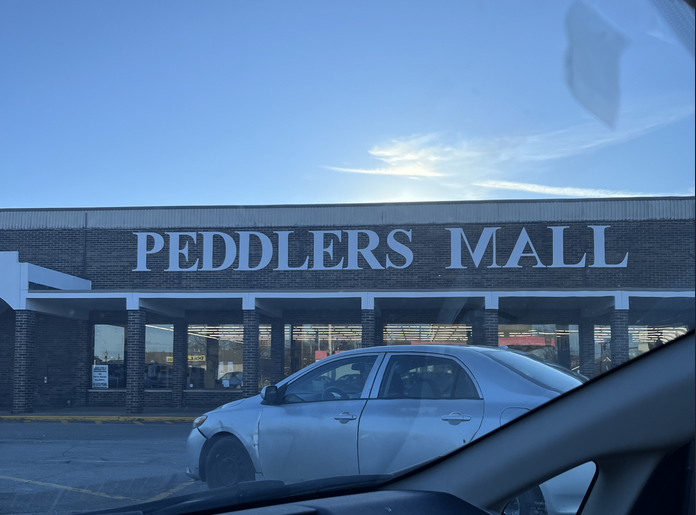
After buying 5 boxes of records there I hit the road for Huntington. Steve told me about a record store there that would have more country gospel LPs than I could shake a stick at. Unfortunately when I got to town I found the store being cleared out by a number of people with trucks. The owner had sold the contents via auction and I just showed up on pick up day. So I went down the road to the Peddlers Mall, an antique mall I’d gone to in 2023.
It was the regular stalls of stuff until I got near the end and I found a few boxes of records on the floor. From there I ended up with a dozen or two country things from the area and a couple 45s. Nothing amazing, but for a dollar each they were well worth it. After being gone for over 12 hours I decided it was time to head back.
I hit a goodwill on the Ohio side of the river and found a really great bunch of bluegrass and gospel LPs for a dollar each before heading out of Huntington for Cleveland. Waffle House was my stop for dinner and at about 11pm I landed home with some cool records and a nice day under my belt.
It felt great to be out again although it’s different now because even though it was only one day I missed my family a lot, and I doubt it will get easier, but I also love digging so I’m going to have to do it.